Financial Advisory Fees: Scope, Process and Cost Factors
Home / Insights / Financial Advisory Fees FINANCIAL ADVISORY Financial Advisory Fees: Scope, Process and Cost Factors Financial…

Insights on business valuation, financial advisory, M&A, corporate growth and international investment from NMS Consulting.

Home / Insights / Financial Advisory Fees FINANCIAL ADVISORY Financial Advisory Fees: Scope, Process and Cost Factors Financial…

Finding investors starts with understanding why capital is needed, how it will be used and which investor types are relevant. A productive search combines company valuation, financial modelling, an investment presentation, investor-fit research and disciplined transaction management.

Due diligence is the structured assessment of information and risks before an investment, business acquisition or major partnership. Financial due diligence focuses on earnings quality, cash flow, working capital, debt and other financial matters affecting economic value or transaction terms.

M&A advisory helps businesses structure mergers, acquisitions and company sales through strategic assessment, buyer or target research, financial analysis, valuation and transaction coordination. The advisory scope is tailored to the buyer’s or seller’s objectives.

A US IPO is a regulated capital-markets transaction involving financial reporting, securities disclosures, underwriters and exchange requirements. Foreign and domestic issuers may face different requirements, so a company preparing for a US listing must assess the relevant legal framework and engage duly authorised professionals.
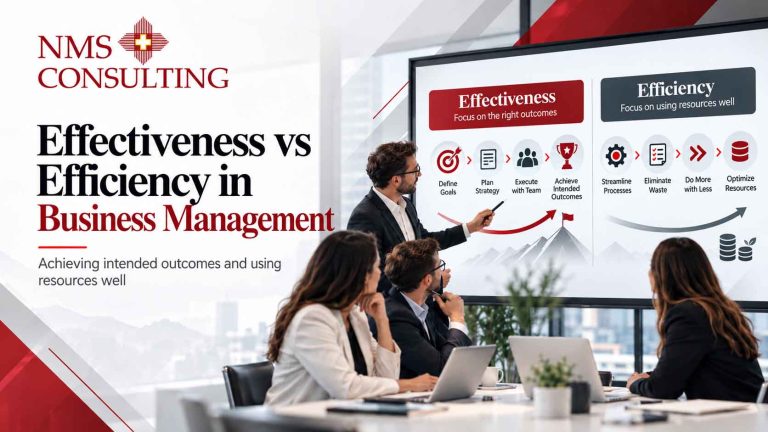
Effectiveness measures whether an organisation achieves its intended results, while efficiency considers how economically it uses resources to achieve those results. A company can be efficient at an activity that does not serve customers or strategy, making it essential to evaluate the two concepts together.

Research and development centres and design centres may perform different technical functions and face different eligibility requirements. Companies exploring formal centre status in Türkiye should understand the actual scope of activities before deciding which structure is relevant.

Lean manufacturing identifies activities that use resources without creating the intended customer value. The traditional seven waste categories provide a practical framework for examining material movement, waiting, defects and production design, but improvement decisions also need to consider quality, demand and financial effects.

Discounted cash flow (DCF) valuation estimates a business’s economic value from projected future cash flows, discounted to reflect time and risk. The method can support company sales, acquisitions and investor discussions, but the result is sensitive to assumptions about growth, margins, capital intensity and the discount rate.
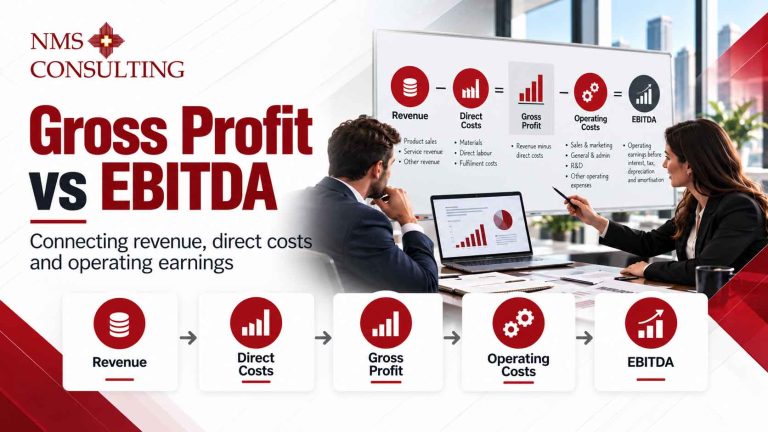
Gross profit and EBITDA measure different layers of a company’s operating performance. Understanding both helps managers analyse pricing, direct costs and broader operating expenses, but neither on its own shows all cash flows or the full economic value of the business.